


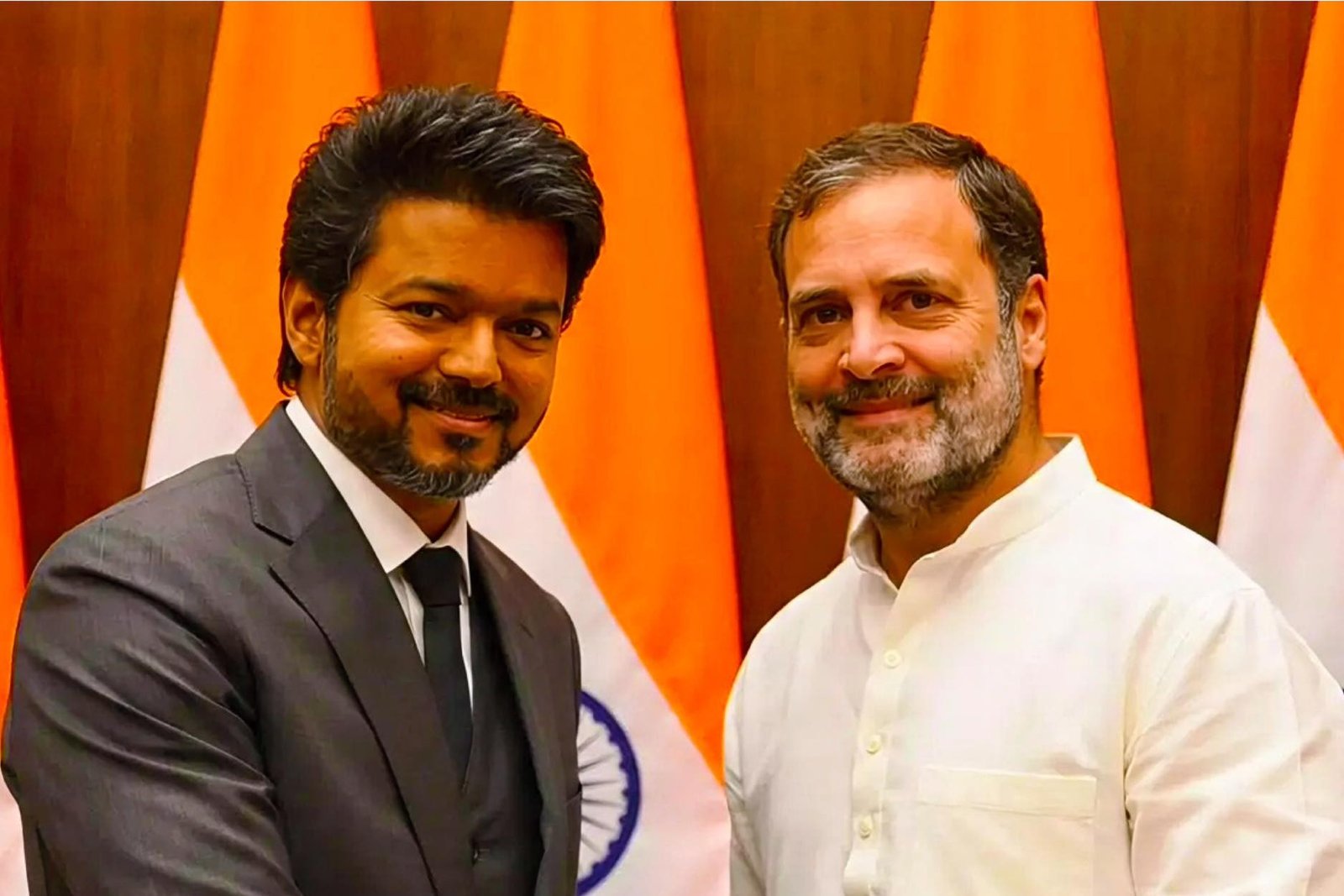
Jana Nayagan controversy entered a new political phase on January 13, 2026, after Congress leader and Leader of Opposition in the Lok Sabha, Rahul Gandhi, publicly expressed support for the film and criticised the delay in its certification. His statement has added national political attention to an issue that was earlier confined largely to legal and film industry discussions, further intensifying debate over cultural expression, regulatory authority, and political interpretation of censorship.
The development comes at a time when Thalapathy Vijay, who stars in Jana Nayagan and also leads Tamilaga Vettri Kazhagam, is already facing heightened political scrutiny due to the ongoing Karur stampede investigation. While the two matters are legally separate, their simultaneous occurrence has placed both Vijay’s political role and cinematic work under intense public focus.
Background of the Certification Dispute
Jana Nayagan was scheduled for release during the Pongal festival season of January 2026. The film, widely regarded as Thalapathy Vijay’s final full-fledged acting project before focusing entirely on politics, generated significant anticipation among fans and within the film industry.
However, the release was delayed following complications related to certification by the Central Board of Film Certification. According to court records and media reports, the CBFC did not immediately grant certification, citing procedural and content-related reviews that were still pending.
Producers of the film approached the Madras High Court seeking directions to the CBFC to issue the certificate. A single judge bench initially directed the certification authority to proceed with granting clearance. This order was later stayed by a division bench, leading to further legal uncertainty.
Subsequently, the producers moved the Supreme Court of India challenging the stay order and seeking urgent relief so that the film could be released without prolonged delay. The apex court has agreed to hear the matter, with the next hearing scheduled for January 19, 2026.
What Happened on January 13, 2026
On January 13, 2026, Rahul Gandhi made public remarks supporting the release of Jana Nayagan and criticised the delay in certification. His comments were reported by multiple national and regional media outlets and were framed as part of a broader argument regarding cultural freedom and political expression.
Rahul Gandhi stated that actions delaying the film’s release amounted to an attempt to suppress voices from Tamil Nadu’s cultural and political sphere. He described the certification dispute as not merely an administrative matter but one that reflects deeper tensions between regional cultural identity and central regulatory systems.
While his remarks did not directly reference Thalapathy Vijay’s political activities, the linkage between Vijay’s cinematic presence and political leadership has made the issue politically sensitive.
Political Context of Rahul Gandhi’s Statement
Rahul Gandhi’s intervention must be viewed within the broader national political framework. As Leader of Opposition, he has frequently positioned himself on issues related to freedom of expression, cultural rights, and federal balance between states and central institutions.
By supporting Jana Nayagan, Rahul Gandhi placed the certification dispute within a political narrative that questions whether regulatory mechanisms are being applied neutrally or selectively.
Congress leaders from Tamil Nadu also echoed similar sentiments, alleging that the certification delay reflects political pressure rather than purely procedural review. These leaders argued that films with political undertones should not be subjected to differential treatment solely based on the political trajectory of the actor involved.
However, leaders from the Bharatiya Janata Party countered these claims, stating that the CBFC follows legal procedures and that no political interference exists in the certification process. They emphasised that certification delays can occur for various technical and content-related reasons and should not be politicised prematurely.
Legal Status of the Jana Nayagan Case
From a legal standpoint, the Jana Nayagan controversy is currently focused on procedural certification and judicial review rather than any criminal or regulatory violation by the filmmakers.
The Supreme Court is expected to examine whether the stay imposed by the Madras High Court division bench was justified and whether the CBFC acted within its statutory mandate.
Legal experts point out that courts typically intervene in certification matters only when procedural irregularities or unreasonable delays are evident. The judiciary does not usually assess creative content but focuses on whether legal processes were properly followed.
Until the Supreme Court hearing is completed, the film remains without certification, preventing its theatrical release.
Public Reaction and Cultural Debate
Public reaction to the certification delay and Rahul Gandhi’s support has been strong across social media platforms and public forums.
Supporters of Thalapathy Vijay have expressed disappointment over the postponement of what many consider a landmark film in his acting career. Some have argued that the delay has financial implications not only for producers but also for theatre owners and distributors who had planned Pongal releases.
Cultural commentators have highlighted that Tamil cinema has historically played a significant role in shaping political discourse in the state, and any interference in film certification is likely to trigger public debate.
At the same time, some civil society voices have cautioned against assuming political motives behind every regulatory delay, urging patience until the judicial process concludes.
Relationship Between Jana Nayagan and TVK Politics
Although Jana Nayagan is a cinematic project, its political resonance is unavoidable due to Thalapathy Vijay’s current political role.
The film’s title, promotional themes, and release timing have been interpreted by many as symbolically aligned with Vijay’s political narrative, though the producers have consistently maintained that it is purely a film and not a campaign tool.
TVK leaders have avoided direct political framing of the certification dispute, instead stating that they expect the legal process to resolve the issue fairly.
C.T.R. Nirmal Kumar and other party leaders have publicly stated that the party does not wish for Jana Nayagan to become a political flashpoint and that its release should happen peacefully through lawful means.
Reaction from Film Industry and Media
Members of the Tamil film industry have also weighed in on the controversy, with several actors and directors expressing concern over prolonged certification delays.
Some filmmakers have pointed out that uncertainty over certification disrupts release schedules and affects contractual obligations across the industry.
Media debates have focused on whether regulatory authorities should provide clearer timelines and communication to prevent speculation and political interpretation.
However, industry bodies have largely refrained from issuing formal statements, choosing instead to wait for the Supreme Court’s ruling.
What Happens Next in the Legal Process
The Supreme Court hearing scheduled for January 19, 2026, is expected to be a decisive moment for the Jana Nayagan controversy.
During the hearing, the court may examine:
Whether CBFC procedures were followed correctly
Whether the High Court stay order was legally justified
Whether interim relief should be granted to allow release
Depending on the outcome, the film could either receive immediate certification or be sent back for further review by the certification authority.
Legal experts caution that even if interim relief is granted, final certification procedures may still take time depending on compliance requirements.
Political Implications Ahead of 2026 Elections
The Jana Nayagan controversy also unfolds against the backdrop of the 2026 Tamil Nadu Assembly elections.
For TVK, the issue intersects with broader questions of political legitimacy, public perception, and cultural positioning.
Opposition parties may interpret the controversy as symbolic of wider tensions between regional politics and national institutions, while ruling parties are likely to frame it as a routine legal matter.
Rahul Gandhi’s involvement has nationalised what was earlier a regional film industry issue, increasing its political visibility.
Analysts note that while the certification dispute alone may not influence electoral outcomes, it contributes to the larger narrative surrounding Vijay’s political entry and public support base.
Public Impact and Broader Cultural Significance
Beyond immediate political consequences, the Jana Nayagan controversy raises broader questions about freedom of artistic expression and regulatory transparency.
Cultural scholars argue that film certification processes must balance societal sensitivities with creative autonomy, and prolonged delays risk undermining confidence in regulatory systems.
For the general public, the issue has revived discussions about how art, politics, and governance intersect in democratic societies.
The debate also highlights the need for clearer communication from authorities to avoid speculation and misinformation.
Conclusion
The Jana Nayagan controversy has moved beyond legal corridors into the national political spotlight following Rahul Gandhi’s public support and criticism of certification delays. While the matter remains under judicial consideration, political reactions have added layers of interpretation that extend beyond cinema alone.
As of January 13, 2026, the film remains unreleased, with the Supreme Court set to hear the producers’ plea on January 19. Until then, discussions around cultural freedom, regulatory authority, and political symbolism are likely to continue.
TVKNews.org will continue to monitor and report on developments related to the Jana Nayagan controversy, court proceedings, political reactions, and their wider impact on Tamil Nadu’s cultural and political landscape.
