


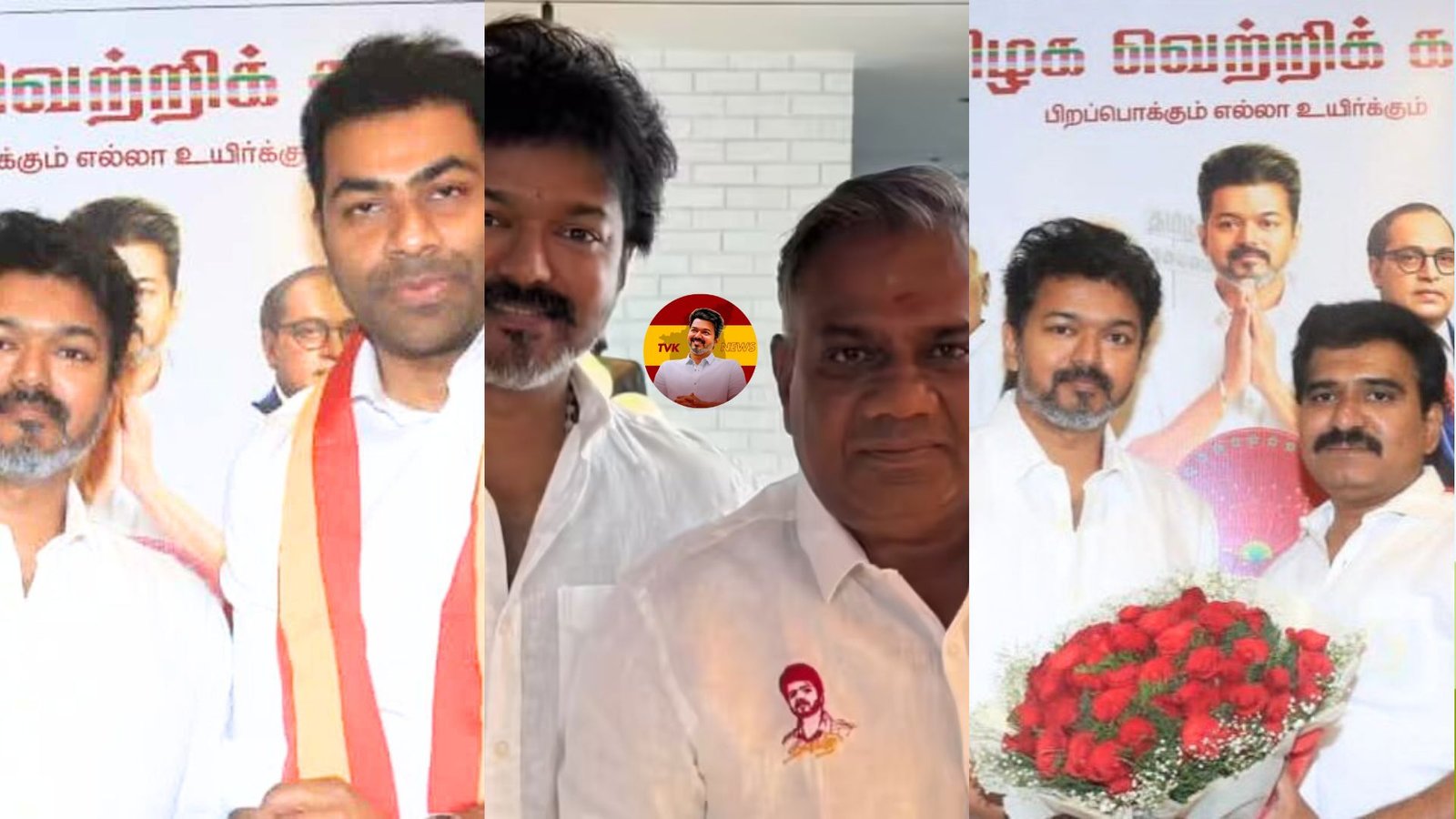
TVK leaders CBI enquiry widened significantly as the Central Bureau of Investigation questioned several senior office-bearers of Tamilaga Vettri Kazhagam in connection with the Karur stampede case. The development comes days after TVK President Thalapathy Vijay appeared before the agency in New Delhi for extended questioning on January 12, 2026.
Officials confirmed that the enquiry has moved into a broader phase aimed at examining organisational planning, coordination mechanisms, and execution-level decisions taken before and during the political event where the stampede occurred. The questioning of multiple leaders indicates that the investigation is now focused on establishing a complete chain of responsibility.
Background of the Investigation
The Karur stampede took place on September 27, 2025, during a large political gathering linked to Tamilaga Vettri Kazhagam’s early organisational activities. The event saw massive turnout, with supporters assembling in large numbers from different districts.
Overcrowding at the venue, combined with inadequate crowd control arrangements, led to panic and confusion. Several people lost their lives, while many others sustained injuries. The incident triggered widespread public outrage and raised serious questions about public safety at political events.
Initial investigations were conducted by the Tamil Nadu Police, which registered cases related to negligence, violation of safety norms, and administrative lapses. However, petitions seeking an independent probe were later filed, citing the scale of the tragedy and the involvement of a major political organisation.
In response, the Supreme Court transferred the case to the Central Bureau of Investigation and directed it to conduct an impartial probe to identify lapses and accountability at all levels.
Senior TVK Leaders Questioned by CBI
As part of the expanded enquiry, the CBI questioned several senior leaders associated with Tamilaga Vettri Kazhagam’s organisational structure.
Among those examined were Bussy Anand, Aadhav Arjuna, and C.T.R. Nirmal Kumar. These leaders are known to play key roles in party coordination, event planning, and organisational communication.
Sources familiar with the enquiry stated that the questioning focused on individual responsibilities, internal decision-making processes, and coordination with local authorities before the Karur event.
Details of the Questioning Process
CBI officials reportedly examined the leaders separately to record their statements and avoid overlap in testimonies. The questioning sessions took place over multiple hours, with investigators seeking clarity on operational and logistical aspects.
Leaders were asked about their roles in crowd mobilisation, volunteer deployment, venue selection, and safety arrangements. Investigators also sought details regarding communication between party organisers and district administration officials.
According to sources, the agency placed particular emphasis on understanding how crowd size was estimated and whether recommendations from police and revenue officials were followed during event execution.
Officials confirmed that the questioning was conducted as part of routine legal procedure and that cooperation was extended by those summoned.
Legal Context and Investigative Scope
The Central Bureau of Investigation clarified that the enquiry is not limited to political leaders alone. The agency is examining all stakeholders involved in the event, including contractors, local organisers, volunteers, and government officials.
Legal experts explained that questioning multiple organisational leaders helps investigators reconstruct the chain of command and assess whether lapses were systemic or individual in nature.
The Supreme Court has directed the agency to ensure that the probe remains evidence-based and free from external influence. Any decision on further action will be taken only after a comprehensive evaluation of testimonies and material evidence.
Reaction from Tamilaga Vettri Kazhagam
Tamilaga Vettri Kazhagam leaders stated that the party respects the rule of law and remains committed to cooperating fully with the investigation.
Party representatives reiterated that TVK believes in institutional accountability and has instructed all office-bearers to assist the CBI whenever summoned. They also appealed to supporters to avoid speculation and allow the legal process to proceed without disruption.
Sources within the party indicated that internal reviews of event management practices are also underway to prevent similar incidents in the future.
Political and Public Response
The questioning of multiple TVK leaders has drawn reactions from across the political spectrum.
Opposition parties stated that the investigation must proceed strictly on legal grounds and that accountability should be determined based on evidence alone. Some leaders emphasised that public safety cannot be compromised during political mobilisation.
Public discourse has largely focused on the need for stricter enforcement of safety norms at large gatherings. Civil society groups have renewed calls for clear guidelines and mandatory compliance mechanisms for organising political events.
Media coverage of the enquiry has remained extensive, with discussions centred on administrative responsibility and institutional oversight.
What the Investigation Is Likely to Examine Next
Investigators are expected to continue examining documents related to permissions, crowd management plans, and communication records.
Sources indicated that further questioning of district-level organisers and local officials is likely in the coming days. The agency is also analysing video footage, entry-exit layouts, and emergency response timelines from the day of the incident.
Depending on findings, the CBI may issue additional summons or consolidate evidence for further legal proceedings.
Public Impact and Broader Significance
The expansion of the TVK leaders CBI enquiry has reinforced the importance of accountability in organising mass political events.
Experts note that the case could set a precedent for how responsibility is fixed in crowd-related tragedies involving political organisations. It has also highlighted the need for professional event management standards and closer coordination with law enforcement agencies.
For the public, the enquiry underscores that safety considerations must take precedence over political mobilisation.
What Happens Next
The CBI is expected to compile statements recorded from all individuals examined so far and cross-check them with documentary and technical evidence.
Any decision regarding chargesheets or closure reports will be submitted to the appropriate court under Supreme Court supervision. Until then, the investigation remains ongoing.
Conclusion
The questioning of senior TVK leaders including Bussy Anand, Aadhav Arjuna, and C.T.R. Nirmal Kumar marks an important phase in the Karur stampede investigation. By widening the scope of enquiry, the CBI aims to establish a complete factual picture and determine responsibility at all levels.
As the probe progresses, attention will remain focused on its findings and their implications for public safety, political accountability, and future conduct of large-scale events in Tamil Nadu
